A Birth Certificate Is Not a Passport: Citizenship and Registration for UK-Born Children
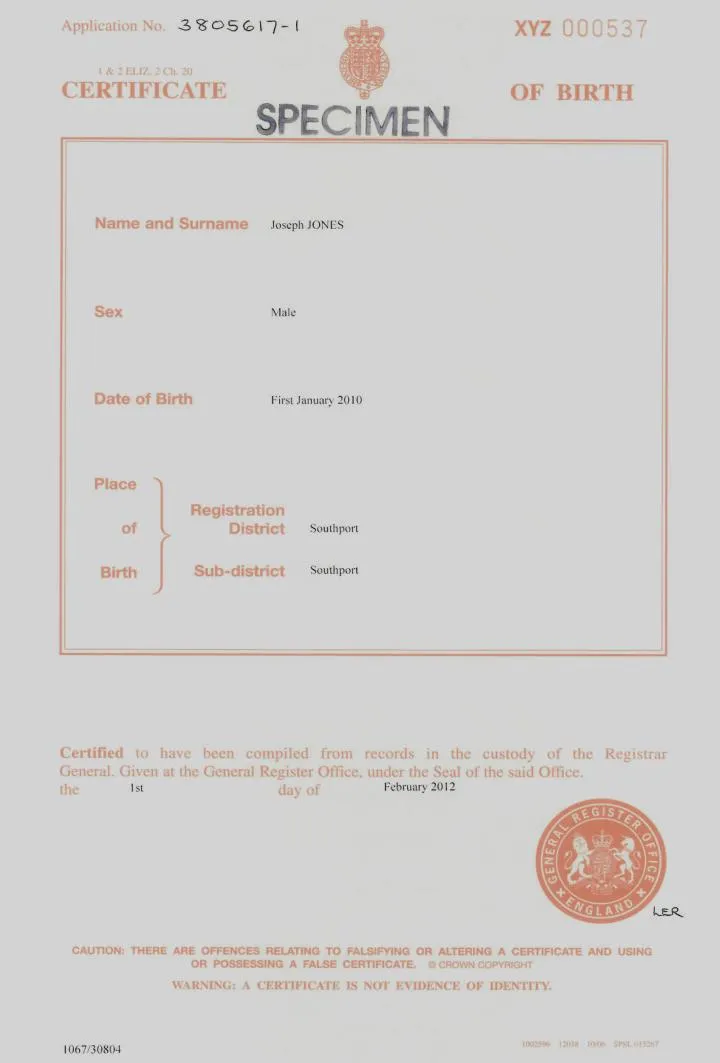
Photo: Unknown authorUnknown author, Public domain, via Wikimedia Commons
The assumption that causes the most difficulty
It is a common and understandable assumption that a child born in the United Kingdom is British. A birth certificate is an important document, but it is not a passport and it is not proof of British citizenship. It records the fact and place of birth. Nationality is a separate legal question, and for a child born in the UK it usually depends on the parents' immigration status at the time of the birth.
For children born in the UK on or after 1 January 1983, British citizenship is automatic at birth only if at least one parent is a British citizen or is settled in the UK at that moment. In broad terms, settled means living in the UK without a time limit on the person's stay. Indefinite leave to remain, EU settled status, permanent residence and certain other unrestricted statuses may meet that description. A visitor visa, student visa, Skilled Worker permission or pre-settled status does not.
If neither parent was British or settled when the child was born, the child is not usually British automatically. That does not always mean there is no route. It means the family needs to look at registration.
Automatic citizenship and registration are different routes
Automatic citizenship arises by operation of law. If the conditions are met at birth, the child is British without an application. Registration is a formal application to the Home Office for British citizenship. It is not automatic and it is not simply a paperwork exercise, although some children have a legal entitlement to be registered if the relevant conditions are met.
A frequent point of confusion arises where a parent obtains indefinite leave to remain or becomes British after the child is born. That later change does not make the child British retrospectively. It may, however, create an entitlement to registration while the child is under 18. The timing of the parent's status change and the child's age therefore matter a great deal.
When a child may have an entitlement to register
The British Nationality Act 1981 contains several registration routes for children born in the UK. Two are particularly relevant to families who assumed the birth itself was enough.
First, where a child was born in the UK and was not British at birth, there may be an entitlement to registration if a parent later becomes British or settled while the child is still under 18. This is often described as registration under section 1(3) of the Act. The application must normally be made before the child turns 18, and the Home Office will need evidence of the parent's change of status.
Second, there is a route for a child born in the UK who has lived here for the first ten years of their life. Again, this is not automatic citizenship; it is an entitlement that must be applied for in the correct way and supported by evidence. Absences from the UK can affect whether the route is available, so a chronology of the child's residence should be prepared carefully.
These routes are valuable because, where the entitlement is established, the Home Office does not have the same broad discretion as it does in other cases. The decision should follow the legal criteria. That said, missing evidence or an incorrectly completed application can still cause delay or refusal.
Discretionary registration for children without an entitlement
Many UK-born children do not fall within an entitlement route. Their circumstances may still justify a discretionary application under section 3(1) of the British Nationality Act 1981. This is often used for children who have spent a significant part of their lives in the UK but whose parents are not British or settled.
The Home Office assesses the child's best interests as a primary consideration. It will look at the child's age, length of residence in the UK, integration into British life, family circumstances, the parents' immigration history and status, and the likely impact of refusal. There is no simple checklist that guarantees success. A discretionary application is exactly that: the Home Office exercises judgment.
Because the assessment is broader, the evidence needs to tell a coherent story about the child's life in the UK. School letters, medical records, evidence of family relationships and a clear explanation of the family's immigration history are often more useful than a large bundle of documents with no narrative. Quality and relevance matter more than volume.
Evidence to gather before applying
The exact documents will depend on the route, but most applications begin with the same core material. The child's full UK birth certificate is essential. The parents' passports and immigration documents should be provided, including evidence of status at the date of birth and at the date of application. Where a parent has indefinite leave to remain or settled status, an eVisa share code or Home Office decision letter may be needed. Expired biometric residence permits should not be relied upon without checking the current position.
For an entitlement application based on a parent's later status, the Home Office will want to see the date the parent became British or settled and proof that the child was under 18 at the relevant time. For a ten-year route, a residence chronology supported by school, GP and other records is likely to be important.
For a discretionary application, families should also consider evidence of the child's integration and family life: school reports, letters confirming attendance, evidence of clubs or community involvement, and details of any siblings or relatives in the UK. If there is a court order or difficulties involving the other parent, that should be explained clearly. Consent from those with parental responsibility may be requested.
Common misunderstandings and practical points
A birth certificate should never be treated as a substitute for a nationality decision. Nor should a family assume that a child's British passport application will resolve the question. The passport office may require evidence of citizenship, and a child who is not British cannot simply be issued a British passport because they were born here.
Another common error is waiting too long. Entitlement routes for children generally depend on the child being under 18. Once the child becomes an adult, different and often more demanding naturalisation rules apply. If a parent's status has changed, the family should take advice promptly rather than waiting for a holiday or a school break.
Finally, families should be careful about relying on general information online without checking their own dates and documents. Nationality law is detailed, and small factual differences can change the route. A child born just before a parent's settlement was granted is in a different position from a child born afterwards, even if the family circumstances appear similar.
How Miah Solicitors can help
Registration applications are document-heavy and fact-sensitive. The work usually involves establishing the child's position at birth, identifying whether an entitlement route applies, and preparing a clear application if discretion is needed. Families should gather the core documents early and obtain advice before submitting an application that may not fit the legal criteria.
This article provides general information and is not legal advice on any individual case. If you are unsure whether a UK-born child is British or may be eligible for registration, professional advice can help you identify the correct route and avoid unnecessary delay.